Find the right large diameter inserts from a certified supplier for your project
In heavy machining, boring, and large-part manufacturing, indexable tooling must deliver repeatable accuracy under high mechanical and thermal loads. Large diameter inserts are a distinct class of indexable cutting tools with inscribed circle measurements typically at or above 16 mm. RONGKE manufactures these inserts for demanding turning, boring, facing, and milling operations in energy, aerospace, heavy equipment, and automotive powertrain production. The larger insert body provides more contact area in the pocket, better heat dissipation, and stronger cutting edges than small inserts. At the same time, it demands precise seat geometry, controlled edge preparation, and the correct grade selection to avoid vibration, built-up edge, and premature flank wear.
Large diameter inserts are frequently used when the depth of cut exceeds 4 mm, the feed rate exceeds 0.35 mm/rev, or the workpiece diameter requires a stable insert with a long cutting edge. Typical applications include rough turning of forged shafts, finish boring of gear housings, roll turning in steel mills, and flange facing in oil and gas components. The cutting forces in these operations can reach several thousand newtons, so the insert must be thick enough to resist bending and the coating must withstand abrasive wear.
Substrate and Coating Grades
RONGKE classifies large diameter inserts into several application-specific grades. The substrate is generally a cobalt-enriched tungsten carbide with a fine grain size from 0.4 µm to 1.5 µm. For large diameter insert, a tougher substrate with a slightly larger grain size is often selected to withstand interrupted cuts and heavy radial loads. However, RONGKE uses gradient sintering to create a cobalt-rich core with a hard surface layer, balancing edge toughness and flank wear resistance. The cobalt gradient is especially important in inserts above 20 mm IC because the center of the insert must remain ductile while the surface layer resists abrasive wear.
The coating architecture is selected based on the workpiece material and the cutting temperature. PVD coatings such as TiAlN, AlCrN, and AlTiSiN provide high hardness at low to medium cutting speeds and are suitable for stainless steel and high-temperature alloys. CVD coatings such as TiCN/Al₂O₃/TiN multilayer systems perform well in high-speed continuous turning of steel and cast iron. RONGKE also offers MT-CVD coatings with a fine-grained TiCN layer for improved adhesion and reduced edge chipping. Each coating lot is tested for thickness uniformity and adhesion using a Rockwell C indentation test. The coating thickness varies from 2 µm on finishing grades to 12 µm on heavy roughing grades.
Mounting, Clamping, and Tool Holder Compatibility
Large diameter insert requires stable seating surfaces and high clamping forces. RONGKE recommends tool holders with a minimum pocket support length of 70% of the insert edge. The center hole is designed for ISO 40° to 60° taper screws, and the insert seat must have matching clearance angles to avoid point loading. For heavy roughing, a top clamp or lever-lock system is preferred over a simple screw clamp because it dampens vibration and prevents insert movement under high feed forces. The insert pocket should be inspected regularly with a dial indicator; runout at the insert corner should not exceed 0.02 mm for finishing operations and 0.05 mm for roughing.
Boring bars that use it require additional attention to overhang ratio. A boring bar overhang of more than four times the bar diameter can cause chatter regardless of insert quality. RONGKE suggests using a heavier carbide boring bar or a damped bar when the overhang exceeds 4×D. In these cases, a trigon or 80° rhombic insert with a smaller nose radius reduces radial cutting force and stabilizes the cut. The clamping screw should be tightened to the torque specified by the tool holder manufacturer, usually between 3 and 6 Nm for large diameter inserts with 8.5 mm or 10.5 mm holes. Under-torquing allows micro-movement that causes fretting and edge chipping, while over-torquing can crack the insert around the hole.
Frequently Asked Questions
How do I select the correct grade for a large diameter insert?
Grade selection begins with the workpiece material and cutting speed. For carbon and low-alloy steel at medium to high speeds, a CVD-coated grade such as RONGKE RK8325 provides excellent flank wear resistance and long tool life. For stainless steel, titanium, and nickel alloys that generate high heat at the cutting edge, a PVD-coated grade such as RK8105 or RK8550 is preferable because PVD coatings have higher hot hardness and better resistance to built-up edge. For cast iron, RK8430 with an alumina-containing CVD coating resists abrasive wear. The selected grade must also match the operation type: heavy roughing requires a tougher substrate, while finishing benefits from a harder, finer-grained substrate. RONGKE grade recommendation charts can be used as a starting point, followed by a short production trial to confirm performance.
What does the IC measurement mean on a large diameter insert?
The inscribed circle, or IC, is the diameter of the largest circle that can be drawn inside the insert shape without crossing any cutting edge. It is the standard way to describe insert size in ISO coding. For example, an IC of 19.05 mm corresponds to a CNMG 1906 insert. The IC determines the pocket size in the tool holder and indirectly controls the maximum depth of cut and feed rate. A large diameter insert with a 25.4 mm IC has a longer cutting edge and more mass than a 16 mm insert, which improves heat dissipation and edge strength but also requires a more rigid machine and a larger tool holder. RONGKE marks the IC in the insert designation and prints it on the package for quick verification.
What is the difference between M class and G class tolerances?
M class is the standard pressed and sintered tolerance specified by ISO 1832. It allows an IC tolerance of ±0.05 to ±0.15 mm depending on the insert size, a thickness tolerance of ±0.025 mm, and a corner radius tolerance of ±0.10 mm. G class inserts are ground on critical surfaces to achieve tighter tolerances: IC ±0.025 mm, thickness ±0.013 mm, and corner radius ±0.03 mm. G class is recommended when multiple inserts are mounted in a milling cutter or precision boring tool and must have equal radial and axial positioning. It is also used for finishing operations where surface finish and dimensional consistency are tightly controlled.
- View as
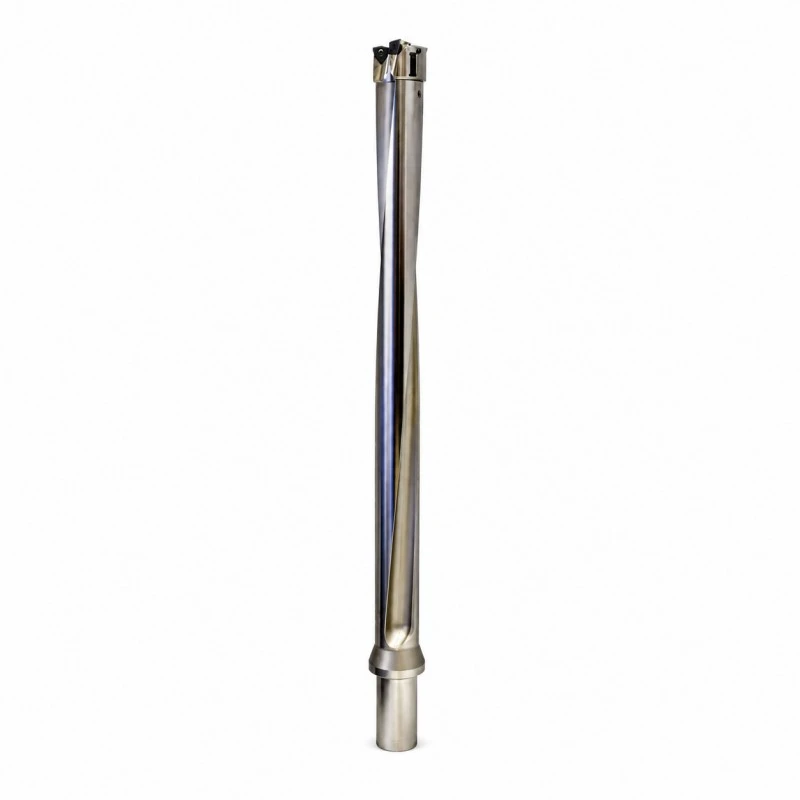
Carbide Center Tips for Large-Diameter Phoenix Combined Drills
When the center cutter needs replacement, RONGKE Carbide Center Tips for Large-Diameter Phoenix Combined Drills supports selection around the center-tip diameter rather than the finished large-hole diameter. Contact us for supplier quotations. Choose PDPA, PDGA or PDMA with the matching center seat and locking screw. Finished large-hole diameter does not identify the replacement tip size.
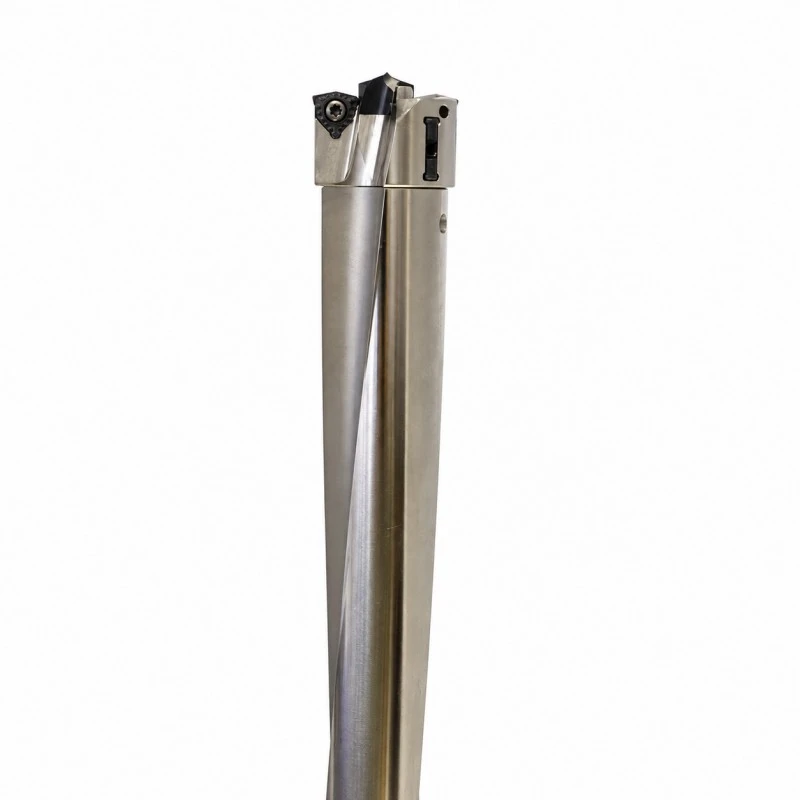
Z-Type Outer Indexable Inserts for Large Diameter Drills
For Z-head replacement insert orders, RONGKE Z-Type Outer Indexable Inserts for Large Diameter Drills supports selection around the ZPMT size assigned to each peripheral cutting position. Contact us for spare-tip quotations. Larger heads may combine different insert sizes. Request the full ZPMT code, edge suffix and cutting position so replacement parts match the actual pocket arrangement.
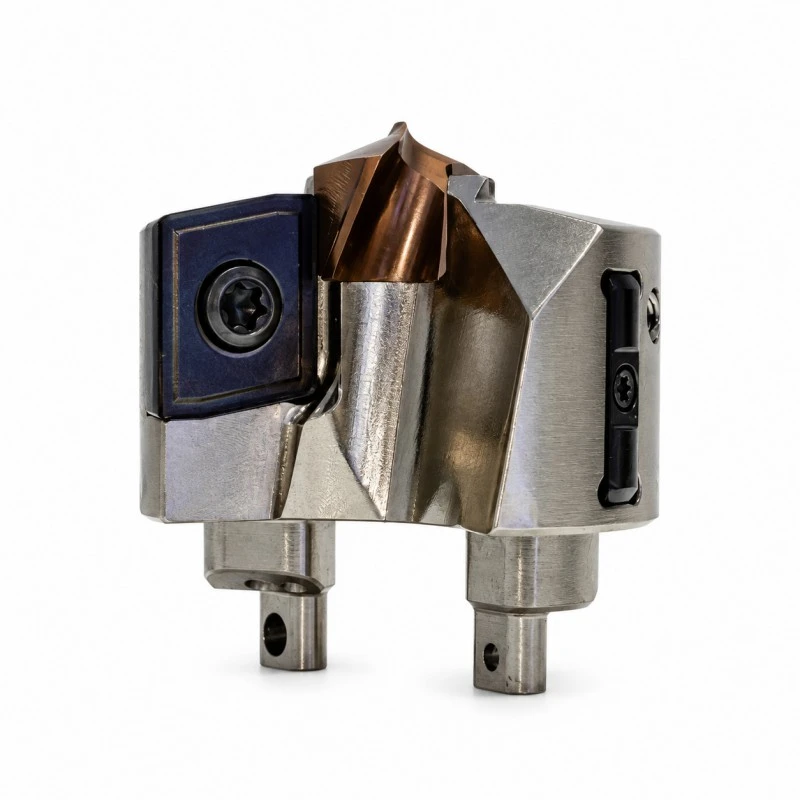
W-Type Outer Indexable Inserts for Large Diameter Drills
When replenishing peripheral W-type cutting edges, RONGKE W-Type Outer Indexable Inserts for Large Diameter Drills supports selection around the complete WOMT size and edge suffix. Contact us for replacement-part orders. Four catalog sizes include straight (-W) and wavy (-WP) options. Order the complete size, edge suffix and grade to retain the specified pocket fit and cutting geometry.
RONGKE supplies Large Diameter Inserts directly from our factory. Get in touch today for pricing and orders!
News Recommendations