Large Diameter Drilling Tools Manufacturer for Industrial Drilling Needs
For geotechnical contractors, foundation engineers, and deep-hole drilling specialists, selecting a Large Diameter Drilling Tool is one of the most consequential equipment decisions on a project. These tools operate under extreme torque, vibration, and abrasive wear, and their performance affects borehole straightness, penetration rate, and overall project cost. RONGKE has spent more than two decades engineering large diameter drilling solutions that combine high-grade steel alloys, precision machining, and field-proven cutting structures.
Cutting Structure Selection
- Tungsten carbide buttons: Best for medium to hard formations, fractured rock, and abrasive sandstone. Spherical and ballistic button shapes provide high impact resistance.
- PDC cutters: Well suited for soft to medium formations such as clay, shale, and soft limestone. PDC layouts deliver faster penetration and smoother borehole walls.
- Hybrid carbide-PDC: Recommended for mixed ground conditions where the formation changes frequently. Hybrid tools maintain cutting efficiency across transitions from soil to rock.
- Conical carbide inserts: Used for hard abrasive rock and high-load applications. Conical shapes improve point loading and reduce insert breakage.
RONGKE engineers evaluate cutting element spacing, exposure height, and back rake angle to optimize chip clearance and cooling flow around the cutters. The flushing nozzle arrangement is then matched to the cutting layout to prevent bit balling and localized overheating.
Connection Systems and Drive Compatibility
The connection system is often the most overlooked element of a large diameter drilling tool, yet it directly affects torque transmission and tool change efficiency. RONGKE supplies BECO connections for large rotary and piling rigs, API connections for conventional drill pipe, and flange or spline connections for special foundation machines. Each connection is machined to tight tolerances and inspected with thread gauges to ensure full load distribution.
Before ordering a tool, confirm the following drive parameters from your rig documentation:
- Maximum torque output at the rotary head or Kelly drive
- Maximum pullback force
- Spindle type and diameter
- Flushing medium and pressure capacity
- Drive direction for top hammer or rotary applications
RONGKE can also machine custom adapters or crossover subs to match non-standard drive systems. This flexibility reduces downtime when moving tools between different rigs or project sites.
Maintenance and Service Life Extension
Regular maintenance has a direct impact on the service life of large diameter drilling tools. After each use, the tool should be cleaned with high-pressure water to remove compacted cuttings and drilling fluid residue. The threads and connection faces should be inspected for galling, pitting, or deformation. RONGKE advises the use of high-quality thread grease containing copper or graphite to reduce friction during make-up.
Cutting elements should be checked for cracks, spalling, or lost inserts. Damaged carbide buttons can be replaced by qualified service centers, and PDC cutters can be re-tipped if the tool body is still in good condition. Gauge pads and stabilizer blades should be measured regularly because gauge loss causes borehole undersize and increases lateral vibration. If the gauge diameter wears more than 3 mm from the original specification, the tool should be refurbished before the next operation.
Storage is equally important. Tools should be stored horizontally on padded racks in a dry, covered area. Exposed threads should be protected with thread caps and a light coating of corrosion inhibitor. RONGKE provides a detailed maintenance manual with each tool, including torque specifications, inspection intervals, and replacement criteria for wear parts.
Frequently Asked Questions
Q: How do I select the right connection type?
A: Start with the rig’s rotary head or Kelly drive specification. If the rig uses a BECO drive system, measure the drive diameter and bolt pattern to select the correct BECO size, such as BECO 6, BECO 8, BECO 10, or BECO 12. If the rig uses threaded drill pipe, match the tool connection to the pipe thread, such as API 4-1/2 IF, API 6-5/8 REG, or API 8-5/8 REG. For special machines, RONGKE can supply flange connections or custom spline adapters. Always confirm the maximum torque and pullback values of the rig to ensure the connection has an adequate safety margin. The RONGKE engineering team can review your rig data sheets and recommend the most durable connection configuration.
Q: What cutting structure works best for hard rock?
A: For hard rock with high uniaxial compressive strength, spherical or ballistic tungsten carbide buttons are generally the best choice. They resist impact fracture and maintain cutting efficiency in abrasive formations. For extremely hard and abrasive rock, conical carbide inserts provide higher point loading and better penetration. PDC cutters are not recommended for hard, fractured rock because they can chip or delaminate under impact. RONGKE can also supply hybrid layouts with carbide buttons on the gauge and PDC cutters in the center for mixed ground conditions where hardness varies.
Q: Can RONGKE drilling tools be used with reverse circulation?
A: Yes. RONGKE manufactures large diameter drilling tools with dedicated reverse circulation ports and internal channels sized to handle high-volume air or fluid lift. Reverse circulation is particularly useful for large shaft drilling because it improves cuttings removal, reduces borehole wall erosion, and maintains a cleaner working face. For reverse circulation applications, the tool should be configured with an internal channel diameter of at least 30% of the nominal tool diameter. RONGKE can also add a center pilot or divider to improve air lift efficiency and prevent blockages.
Q: What maintenance is required to extend the service life?
A: The most important maintenance tasks are regular cleaning, thread inspection, cutting element inspection, and gauge measurement. After every drilling shift, clean the tool with high-pressure water to remove cuttings and drilling fluid. Inspect the thread connection for galling or pitting, and apply a quality thread compound before storage. Check all cutting elements for cracks, spalling, or loss of inserts. Measure the gauge diameter at three points around the tool; if wear exceeds 3 mm from the original diameter, schedule refurbishment. Store the tool horizontally in a dry, covered area with thread caps installed. RONGKE provides a maintenance log template to help operators track service hours and wear patterns.
- View as
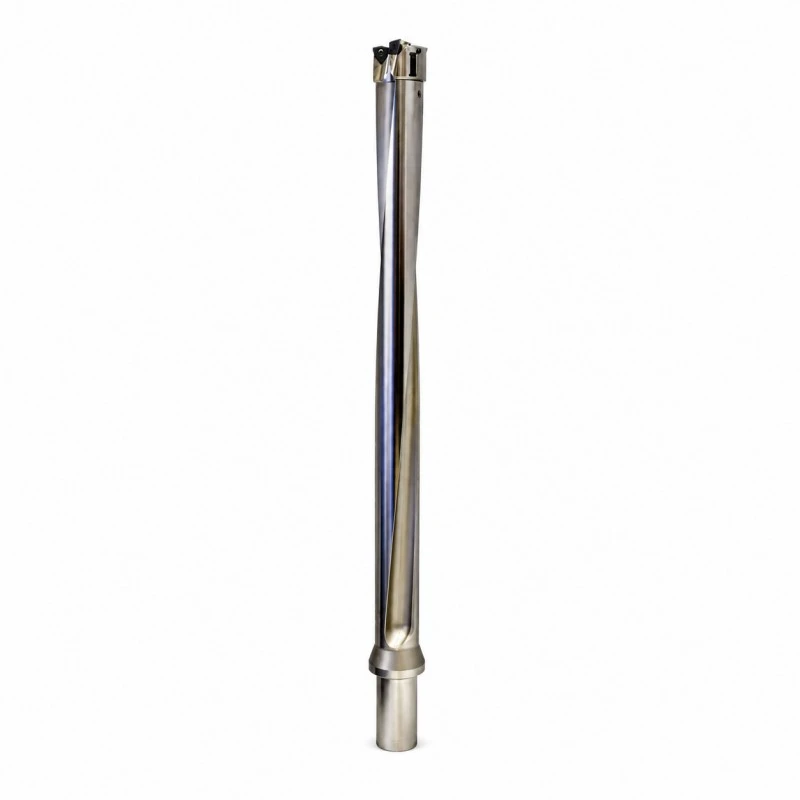
Carbide Center Tips for Large-Diameter Phoenix Combined Drills
When the center cutter needs replacement, RONGKE Carbide Center Tips for Large-Diameter Phoenix Combined Drills supports selection around the center-tip diameter rather than the finished large-hole diameter. Contact us for supplier quotations. Choose PDPA, PDGA or PDMA with the matching center seat and locking screw. Finished large-hole diameter does not identify the replacement tip size.
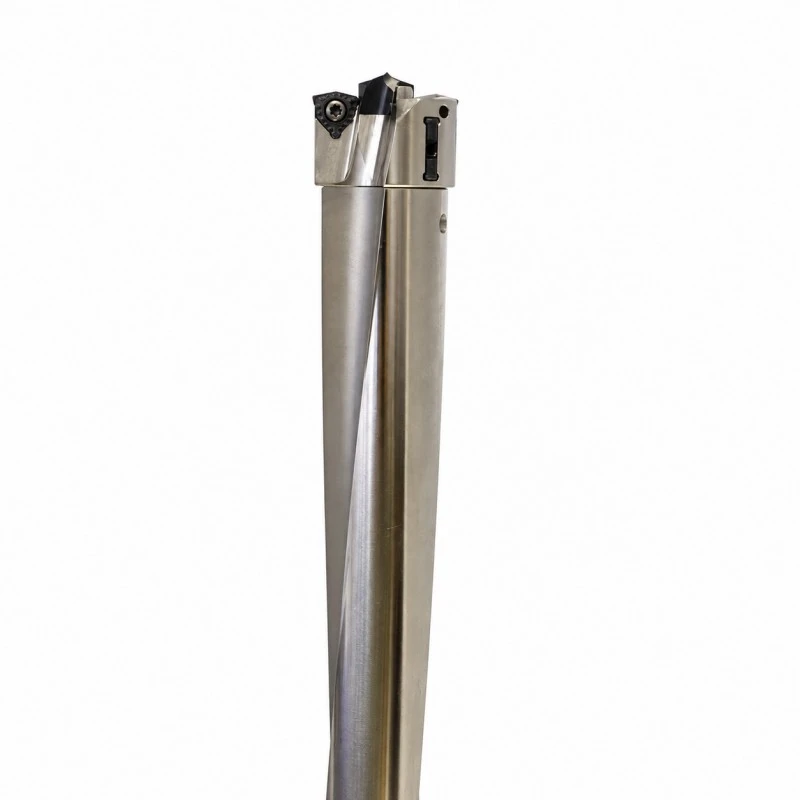
Z-Type Outer Indexable Inserts for Large Diameter Drills
For Z-head replacement insert orders, RONGKE Z-Type Outer Indexable Inserts for Large Diameter Drills supports selection around the ZPMT size assigned to each peripheral cutting position. Contact us for spare-tip quotations. Larger heads may combine different insert sizes. Request the full ZPMT code, edge suffix and cutting position so replacement parts match the actual pocket arrangement.
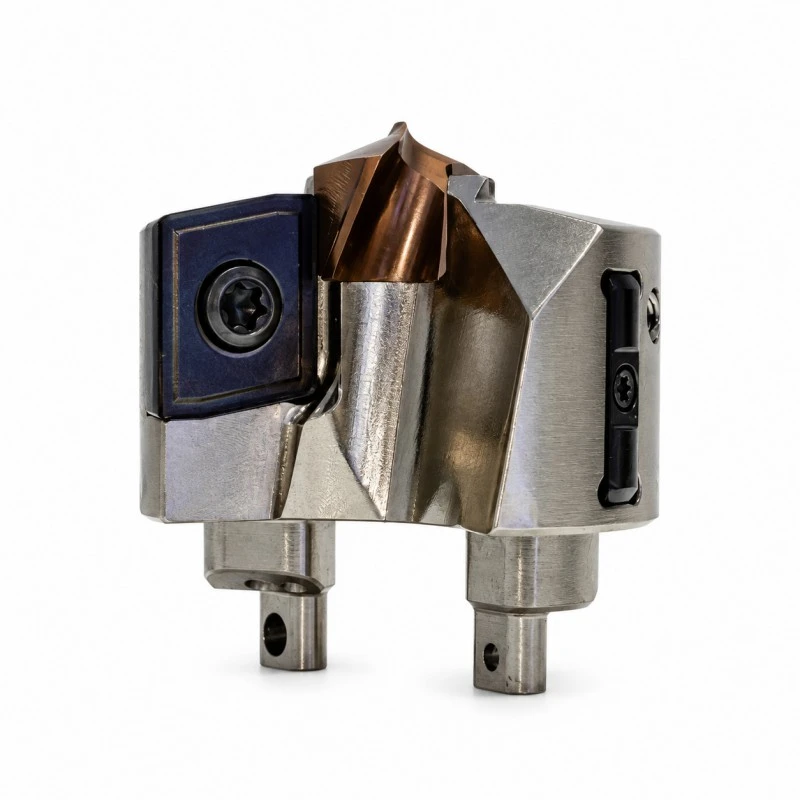
W-Type Outer Indexable Inserts for Large Diameter Drills
When replenishing peripheral W-type cutting edges, RONGKE W-Type Outer Indexable Inserts for Large Diameter Drills supports selection around the complete WOMT size and edge suffix. Contact us for replacement-part orders. Four catalog sizes include straight (-W) and wavy (-WP) options. Order the complete size, edge suffix and grade to retain the specified pocket fit and cutting geometry.
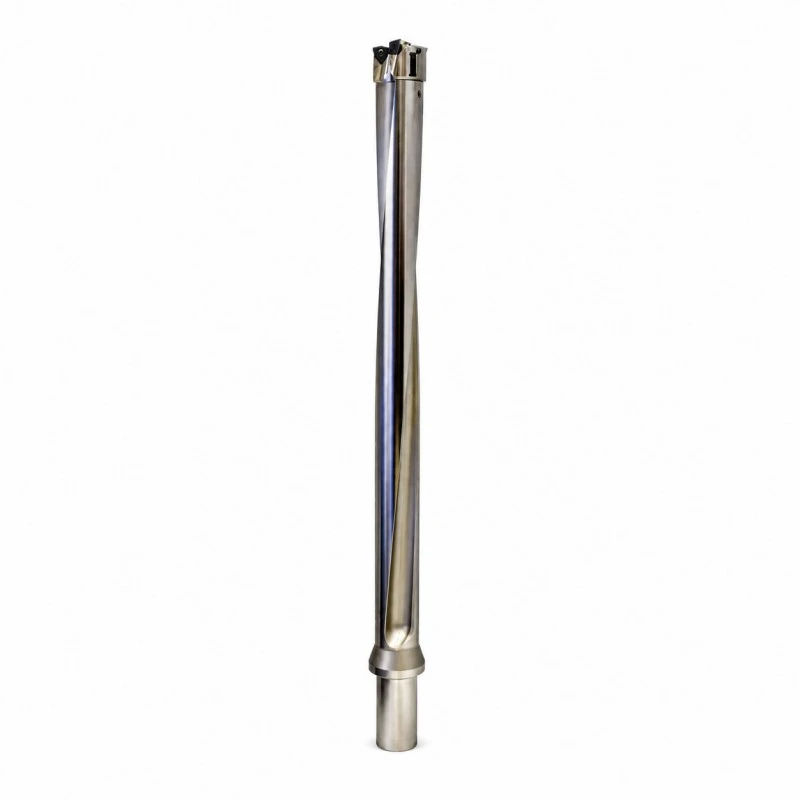
Guide Pads for Modular Large Diameter Phoenix Drill
For replacement of a worn support component, RONGKE Guide Pads for Modular Large Diameter Phoenix Drill supports selection around the support radius and fastener of the GP pad. Contact us for purchase planning. They guide against the hole wall and are distinct from cutting inserts and PT/PD margins. Request the complete pad code, support radius, thickness and matching fastener.
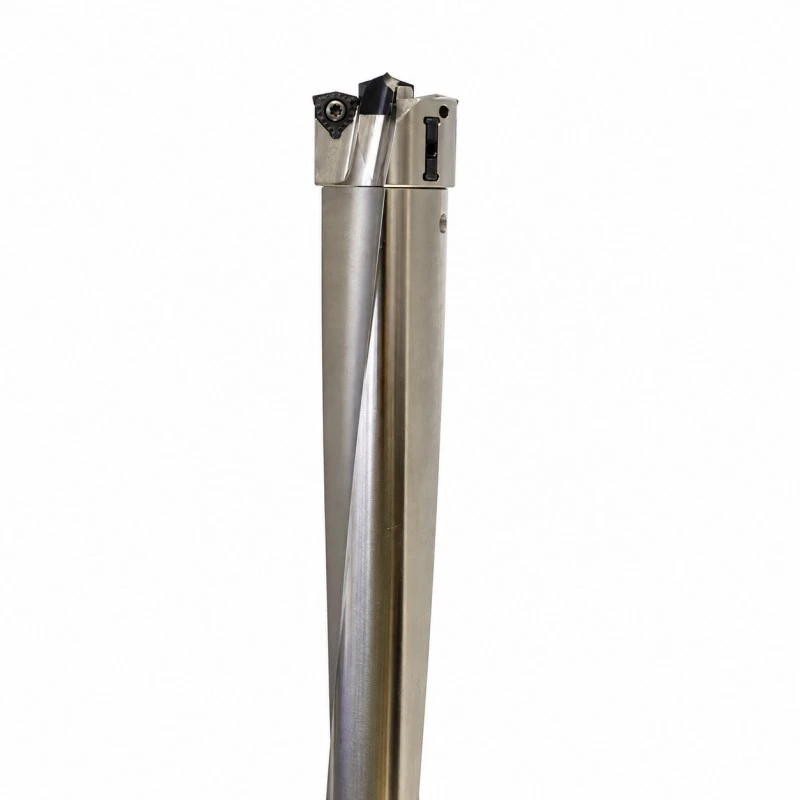
W-Type Modular Large Diameter Phoenix Drill
For combined heads built around WOMT pockets, RONGKE W-Type Modular Large Diameter Phoenix Drill supports selection around the WOMT size and edge style of the W head. Contact us for bulk orders. The cited Ø32 mm head pairs a Ø15 mm center tip with LJ32. Specify the W head, listed reach and straight or wavy outer-insert geometry when requesting a quotation.
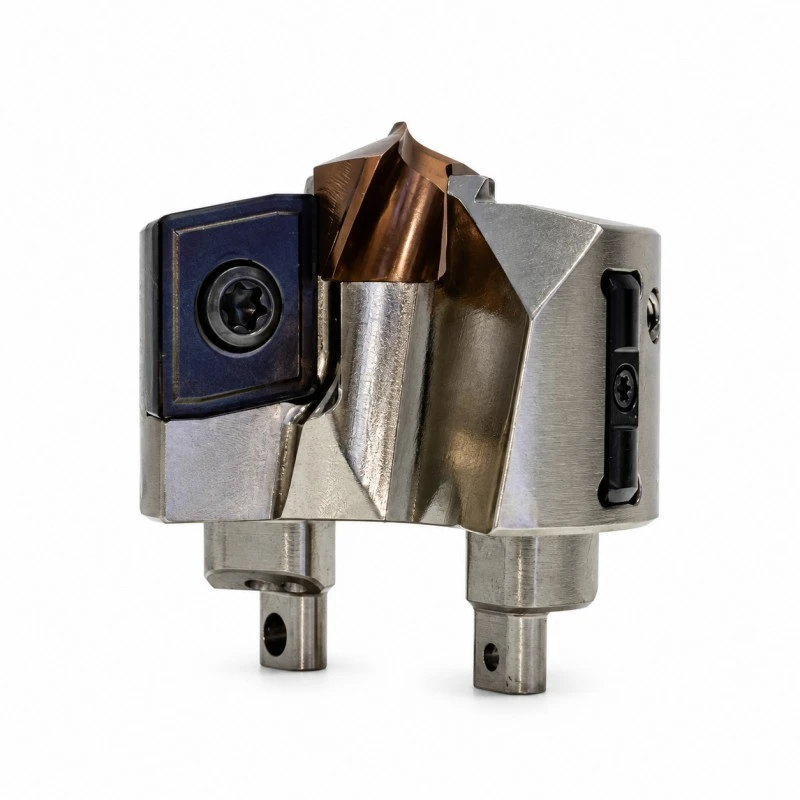
Z-Type Modular Large Diameter Phoenix Drill
When the selected combined head uses ZPMT inserts, RONGKE Z-Type Modular Large Diameter Phoenix Drill supports selection around the ZPMT pocket arrangement of the chosen Z head. Contact us for factory pricing. The cited Ø52 mm head uses a Ø25 mm center tip and LJ50 connection. Order the Z head, cutting components and body as a matched combination.
RONGKE supplies Large Diameter Drilling Tools directly from our factory. Get in touch today for pricing and orders!
News Recommendations