High-Performance Solid Carbide Micro Drills for Precision Drilling
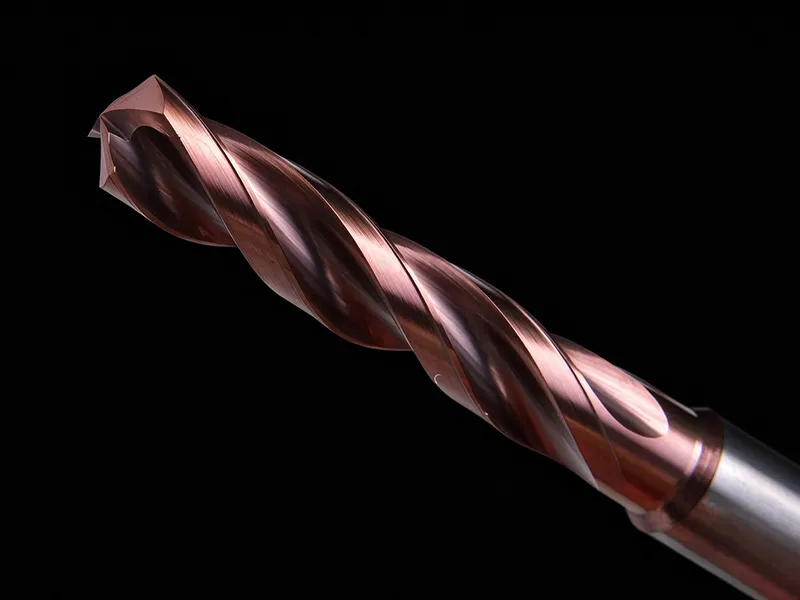
Micro hole production is no longer limited to specialized laboratories. Today, holes below 1.00 mm are standard in printed circuit boards, fuel injection nozzles, medical bone screws, and precision molds. When diameters drop below 3.00 mm, tool rigidity, concentricity, and edge quality become the dominant factors in hole accuracy, tool life, and scrap rate. RONGKE Solid Carbide Micro Drills are engineered for exactly this range. They combine ultra-fine grain cemented carbide, precision ground geometries, and controlled PVD coatings to deliver stable performance at spindle speeds above 30,000 rpm.
How RONGKE Builds Solid Carbide Micro Drill for Stable Micro Hole Making
RONGKE manufactures its micro drills from sub-micron tungsten carbide with a nominal grain size of 0.4 µm and a 6% cobalt binder. This grade achieves a hardness of HRA 92.5 and a transverse rupture strength of 4,000 MPa. The combination of high hardness and sufficient toughness allows the cutting edges to resist wear while avoiding premature chipping in difficult materials.
Raw Material and Edge Preparation
- Raw material: sub-micron grain cemented carbide, 93% WC / 6% Co / 1% other carbides
- Nominal grain size: 0.4 µm
- Hardness: HRA 92.5 / HV30 1,900
- Transverse rupture strength: 4,000 MPa
- Density: 14.75 g/cm³
- Cutting edge radius: 1–3 µm depending on drill diameter
- Flute surface roughness: Ra ≤ 0.2 µm
Every batch of RONGKE micro drills is ground on high-precision CNC tool grinders. The flute surfaces are polished to reduce chip adhesion and improve chip evacuation, which is especially important in deep micro holes where chip packing is the main cause of tool breakage.
Standard Geometric Parameters
The geometric tolerances below cover the standard RONGKE solid carbide micro drill range. Custom values can be ordered for specific workpiece materials or high-aspect-ratio holes.
- Diameter range: 0.05 mm to 3.00 mm
- Diameter tolerance: ±0.001 mm for D ≤ 0.50 mm; ±0.002 mm for D > 0.50 mm
- Shank diameter: 3.175 mm (1/8 inch) standard; 2.0 mm and 4.0 mm available
- Shank tolerance: h4 for shank diameters up to 3.175 mm; h6 for larger shanks
- Concentricity: ≤ 0.003 mm between drill point and shank axis
- Point angle: 130°, 140°, 150° standard; 120° and 160° on request
- Helix angle: 25°, 30°, 35° standard; 40° for deep-hole aluminum drilling
- Flute length: 1.5×D to 12×D depending on series
- Overall length: 38 mm, 50 mm, 60 mm, 70 mm standard
- Balance quality: G2.5 at 40,000 rpm
Application Sectors
RONGKE solid carbide micro drills are used across a wide range of industries where hole size, position, and consistency are critical.
- PCB and microelectronics: through-hole and via drilling in FR4, high-Tg laminates, and flexible circuits.
- Medical device manufacturing: bone screws, stents, guide holes, and surgical instrument components.
- Automotive fuel systems: injection nozzle holes from 0.10 mm to 0.50 mm with tight flow consistency requirements.
- Aerospace: turbine blade cooling holes and composite drilling in carbon fiber reinforced polymers.
- Precision mold and die: ejector pin holes, vent holes, and micro features in hardened tool steels.
- Watchmaking: plate and bridge holes, jewel bearing seats, and micro mechanical features.
- Fiber optic connectors: ceramic ferrule bores requiring excellent roundness and surface finish.
Why Choose RONGKE Solid Carbide Micro Drill
RONGKE is an ISO 9001 certified manufacturer specializing in high-precision rotary tools. Each batch of micro drills is inspected under 50× to 200× optical magnification and checked on laser measuring equipment. The company records diameter, web thickness, point geometry, and surface roughness for full traceability.
- In-house blank preparation and grinding for consistent raw material quality.
- 100% dimensional inspection on critical features such as diameter, runout, and point angle.
- Sub-micron grain carbide only, with no recycled or mixed grades.
- Custom diameters and lengths available within 7–10 working days after drawing approval.
- Application support for speeds, feeds, coolant strategy, and tool holder selection.
- Strict packaging with individual anti-collision tubes or trays for diameters below 0.50 mm.
Tool Holding and Runout Control
Micro drills are highly sensitive to spindle runout. A runout error of 5 µm at the tool tip can reduce tool life by 50% and cause oversized holes. RONGKE recommends hydraulic or shrink-fit holders for all diameters below 0.50 mm. Collet chucks are acceptable only if the measured runout at the drill tip is below 3 µm.
- Check runout with a dial indicator or non-contact laser before every setup.
- Use short holder extension lengths to minimize dynamic deflection.
- Balance the complete tool holder assembly to G2.5 or better at the operating speed.
- Clean the holder bore and shank before assembly to avoid runout caused by contamination.
- For diameters below 0.10 mm, verify spindle speed consistency with a tachometer.
Coolant and Lubrication Strategies
Coolant selection has a direct effect on chip evacuation and tool life. For aluminum and steel, use a water-soluble coolant with high lubricity and a concentration of 8–12%. For stainless steel and titanium, flood coolant or coolant-through spindle is recommended. For PCB and carbon fiber, dry machining or minimum oil mist is often better because liquid coolant can cause laminate contamination or delamination.
- Direct the coolant jet to the drill entry point, not across the shank.
- Use a minimum of 20 bar coolant pressure for holes deeper than 5×D.
- For dry machining, use short peck cycles and a vacuum chip extraction system.
- Avoid thermal shock: do not apply intermittent coolant to carbide micro drills.
How to Order
When requesting a quote, specify the drill diameter, flute length, overall length, point angle, helix angle, coating, and workpiece material. If you are not sure which geometry is best, provide the material grade, hole depth, tolerance, and machine spindle type. RONGKE application engineers will recommend a standard item or a custom configuration.
- Standard items: available from stock in the most common diameters and lengths.
- Custom items: produced in 7–10 working days after drawing approval.
- Minimum order quantity: 10 tools for standard items; 30 tools for custom diameters below 0.10 mm.
- Packaging: individual anti-collision tubes for diameters below 0.50 mm; protective trays for larger sizes.
Frequently Asked Questions
Q: What is the smallest diameter available in the RONGKE solid carbide micro drill range?
A: The standard range starts at 0.05 mm. Diameters below 0.10 mm are manufactured to order because the cutting edge radius and point geometry must be matched to the workpiece material. For a 0.05 mm drill, RONGKE recommends spindle runout below 2 µm and a spindle speed above 60,000 rpm when drilling non-ferrous materials. The feed rate should start at 0.002–0.004 mm/rev with a peck depth of 0.05–0.10 mm.
Q: How do I prevent micro drill breakage?
A: Micro drill breakage usually comes from runout, chip packing, or excessive feed. Use a hydraulic or shrink-fit holder, verify spindle runout below 3 µm, and program short peck cycles. Retract fully every 3–5 pecks to clear chips. For holes deeper than 3×D, reduce feed by 30–40%. Also check the coolant pressure: a misdirected coolant jet can deflect micro drills and cause instant failure. If breakage continues, reduce the spindle speed by 10–20% and check the entry surface for unevenness.
Q: Which coating should I choose for PCB drilling?
A: For FR4, high-Tg laminates, and ceramic-filled boards, nACo or DLC coatings provide the best abrasion resistance and lower friction. These coatings reduce resin adhesion and improve hole wall quality. For flex circuits and copper-clad laminates, DLC is especially effective because it prevents built-up edge and allows higher feed rates without delamination. Use a spindle speed of 60,000–125,000 rpm for diameters 0.10–0.50 mm with a feed of 0.010–0.025 mm/rev.
- View as
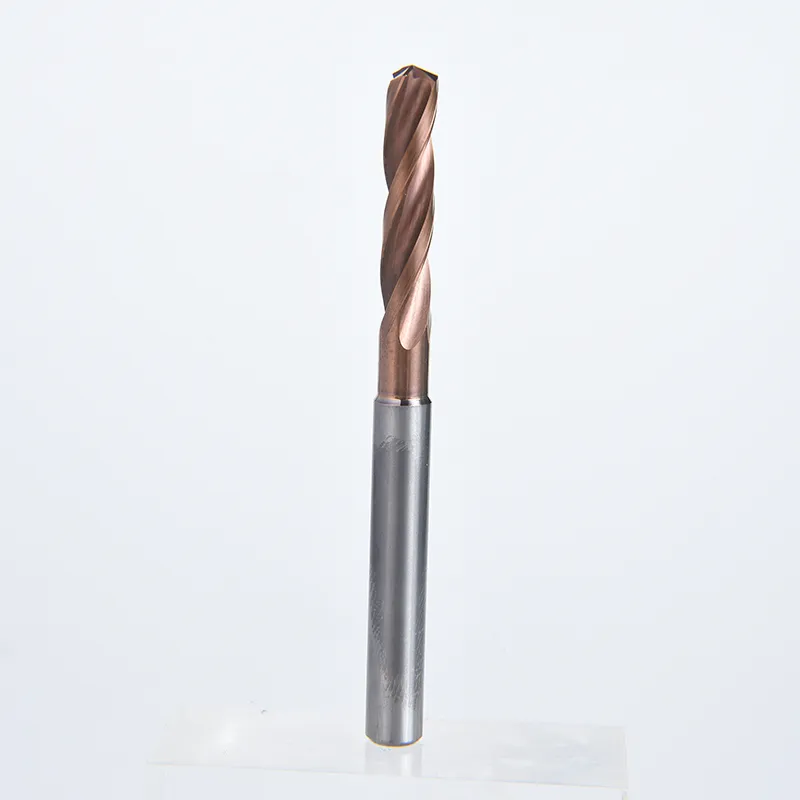
Internal Coolant Solid Carbide Three Flute Micro Drill
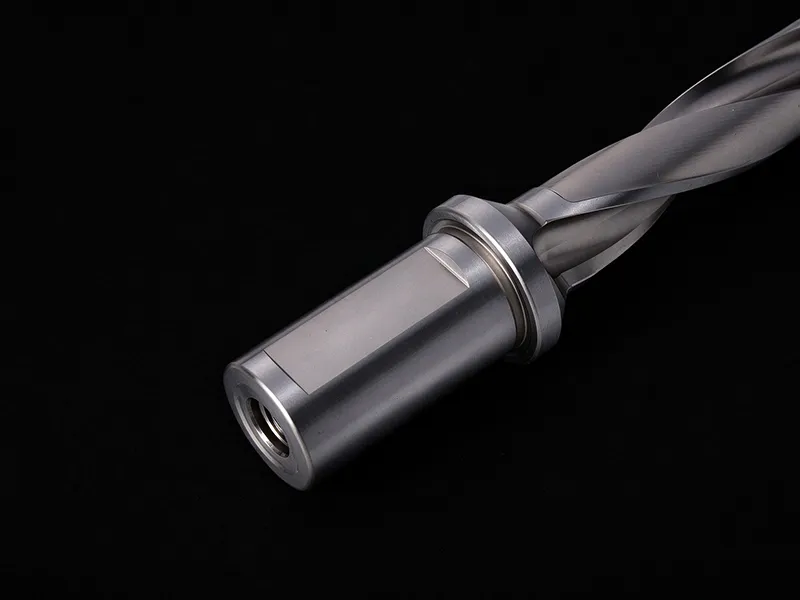
RONGKE supplies the Internal Coolant Solid Carbide Three Flute Micro Drill for CNC drilling where external nozzles have limited access to the cutting zone. Available catalogue depth families are 3D, 5D and 8D, covering Ø5.0–12.0 mm. Contact the China factory with your coolant setup and hole drawing for a quotation.
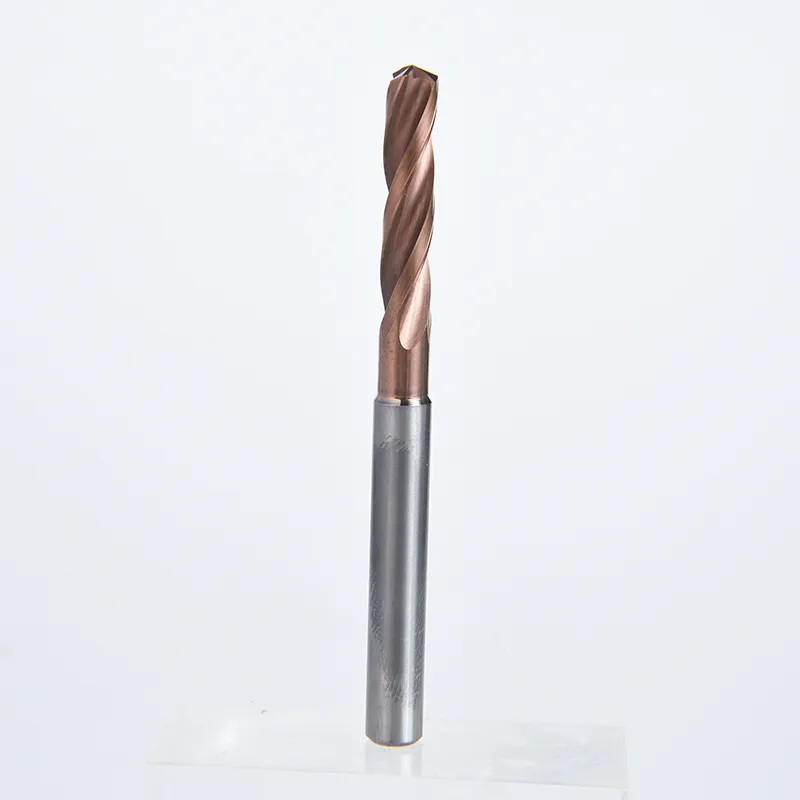
5D 8D Solid Carbide Three Flute Micro Drill Bits
Compare RONGKE 5D 8D Solid Carbide Three Flute Micro Drill Bits for holes beyond the reach of the short DS303C series. This China supplier offers DS305C and DS308C catalogue sizes from Ø5.0 to 12.0 mm. Send the hole drawing for model selection and wholesale pricing based on the required reach.
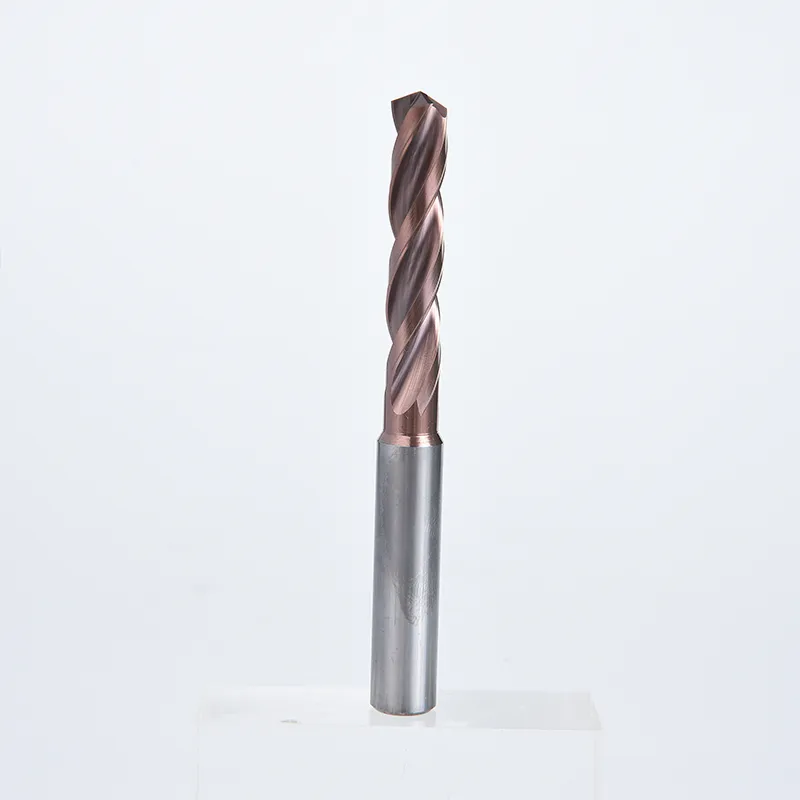
3D Solid Carbide Three Flute Micro Drill Bits
RONGKE offers 3D Solid Carbide Three Flute Micro Drill Bits for short-hole CNC machining. Manufactured in China, the DS303C range combines a compact body with three cutting edges and diameters from Ø5.0 to 12.0 mm. Request a factory quotation for standard sizes or a review of your non-standard drawing.
RONGKE supplies Solid Carbide Micro Drills directly from our factory. Get in touch today for pricing and orders!
News Recommendations