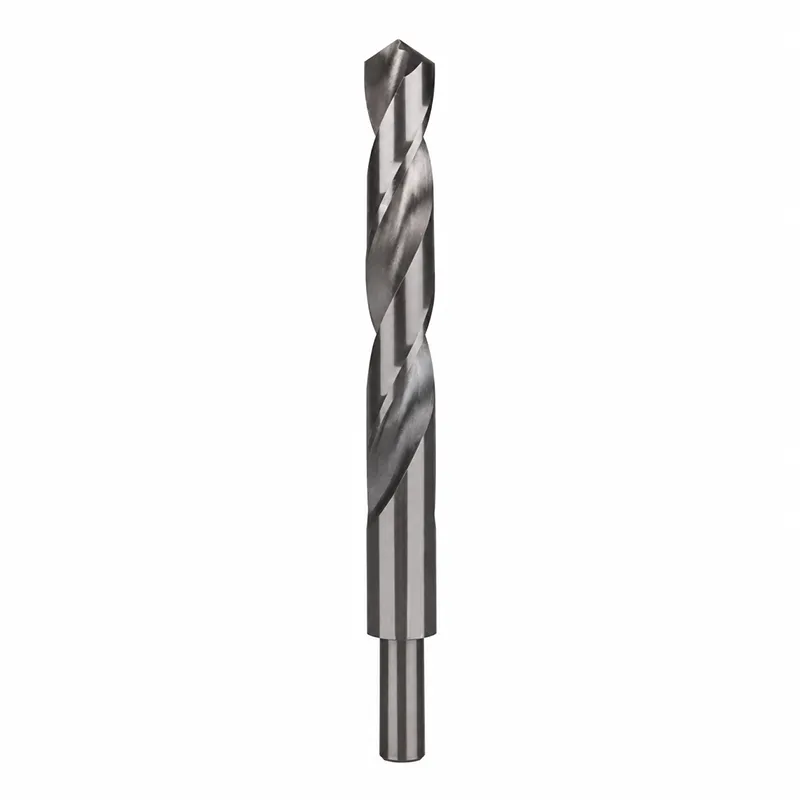
HSS Reduced Shank Twist Drill Bits
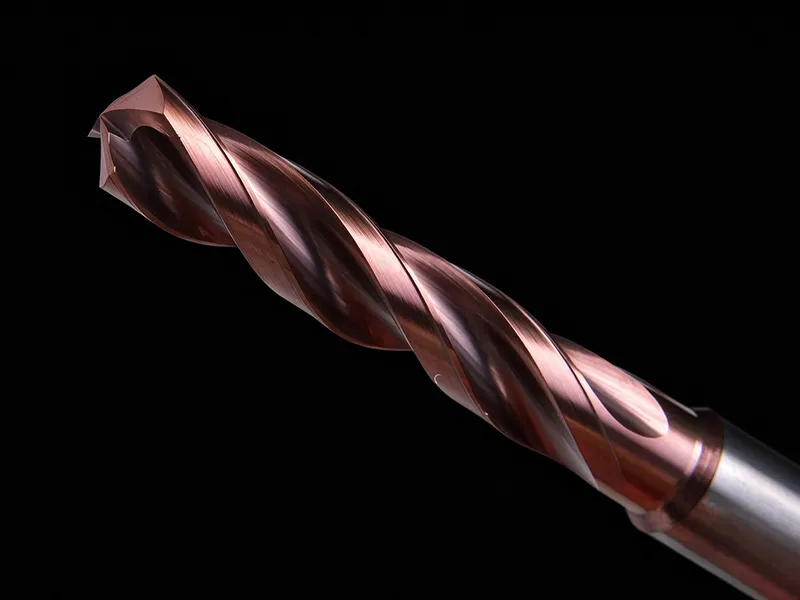
For buyers who need a larger drilling diameter without a correspondingly large chuck capacity, RONGKE HSS Reduced Shank Twist Drill Bits offer a practical tooling configuration. The drill has a cutting diameter larger than its cylindrical shank, with reference sizes from 14 mm to 20 mm, using 10 mm or 13 mm reduced shanks. Based on the DIN 338 length family, the drills feature a 118° split point and are intended for general metal drilling where the existing machine and holder can accommodate the reduced shank.
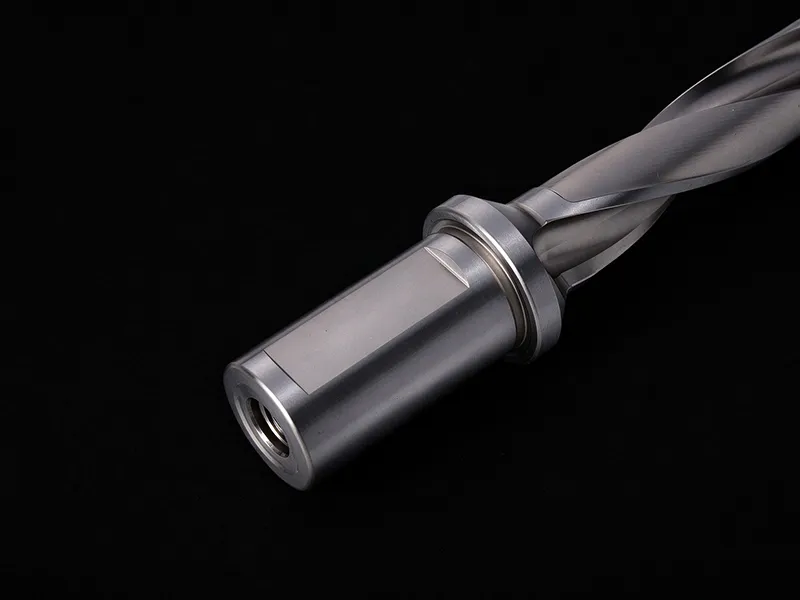
HSS Reduced Shank Twist Drill Bits are different from a conventional drill mainly at the point where it is held. The cutting diameter is intentionally larger than the shank diameter, allowing a larger drill to be used in a chuck with a smaller gripping capacity.
For example, the reference RONGKE configuration includes a 20 mm cutting diameter with a 13 mm shank, while 14–16 mm drills are available with 10 mm shanks. This makes the design useful when the required hole size exceeds the practical shank capacity of the existing chuck.
The reduced shank does not change the size of the hole being produced. The fluted body still determines the cutting diameter; the smaller cylindrical section simply provides the connection to the holder. For this reason, both dimensions should be confirmed separately when purchasing.
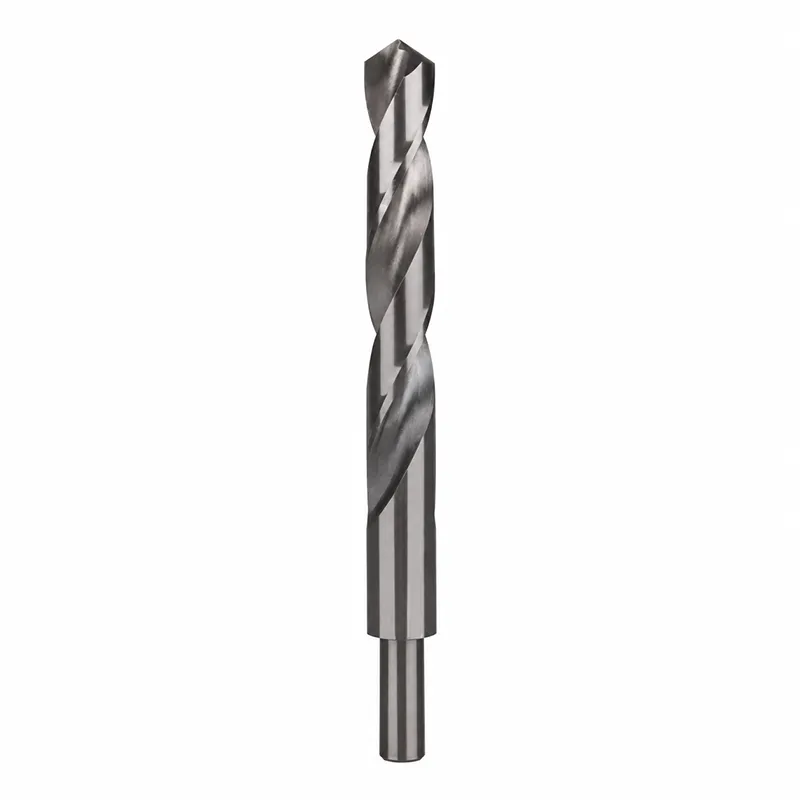
Larger Cutting Diameter, Smaller Shank
The main advantage of HSS Reduced Shank Twist Drill Bits lie in the relationship between its two diameters.
More Hole Size Within a Limited Chuck
A reduced shank allows a larger-diameter drill to be held by a compatible smaller chuck. This can be useful for workshops that already have suitable drilling equipment but do not have a chuck large enough for the full cutting diameter.
Two Shank Options in the Reference Range
RONGKE's listed sizes use 10 mm or 13 mm shanks, depending on the cutting diameter. This gives buyers a straightforward way to match the tool with the holding capacity already available on the machine.
118° Split Point
The reference configuration uses a 118° split point and right-hand cutting. Point geometry can be confirmed together with the workpiece and required drill size when placing an order.
Conventional HSS Construction
The drill uses HSS as the reference tool material and an uncoated finish. It is intended for suitable general metal drilling applications rather than a specialized coating-dependent process.
Key Facts at a Glance
|
Item |
Reference configuration |
|
Reference material |
HSS |
|
Reference dimensions |
DIN 338 length family with reduced shank |
|
Point and rotation |
118 degree split point; right hand cutting |
|
Shank format |
Reduced cylindrical shank |
|
Reference finish |
Uncoated |
Technical Specifications
Common reference sizes in mm. Final material, geometry, dimensions and availability are confirmed with the quotation.
|
Cutting diameter d |
Shank diameter |
Overall length L |
Shank length |
|
14.0 |
10.0 |
160 |
30 |
|
15.0 |
10.0 |
169 |
30 |
|
16.0 |
10.0 |
178 |
30 |
|
17.0 |
13.0 |
184 |
35 |
|
18.0 |
13.0 |
191 |
35 |
|
20.0 |
13.0 |
205 |
35 |
Choose the Drill Around Your Chuck
The correct selection starts with the required hole diameter, but it should not end there.
Suppose the finished hole needs to be 18 mm. The buyer should then check whether the machine can securely hold the corresponding 13 mm reduced shank, rather than assuming that the chuck must accept an 18 mm shank.
Four dimensions or conditions deserve attention:
Hole diameter determines the required cutting diameter.
Chuck capacity determines whether the reduced shank can be held.
Grip length affects how securely the cylindrical shank can be clamped.
Machine capacity must still be sufficient for the larger drilling operation.
A smaller shank solves a holding-size limitation; it does not eliminate the power, torque or rigidity required to drill a larger hole.
Where a Reduced Shank Drill Makes Sense
Larger Holes with Limited Chuck Capacity
This is the most direct application. When the required hole diameter is larger than the chuck's conventional drill capacity, a reduced-shank configuration may provide a workable alternative, provided the shank can be securely held.
Existing Workshop Equipment
For buyers who already operate suitable drilling machines, using a reduced-shank drill can avoid selecting a completely different holding arrangement simply because a larger hole is required.
General Engineering Parts
The HSS Reduced Shank Twist Drill Bits can be considered for suitable steel, aluminium and other metalworking applications according to the workpiece grade, hardness and cutting conditions.
Fabrication and Maintenance
The format is also relevant to repair and fabrication work where different hole sizes are encountered and the available drilling equipment has a defined chuck range.
RONGKE Reduced-Shank Tool Supply
RONGKE has in-house capabilities covering R&D, production and inspection of precision hole-processing cutting tools, with more than ten years of experience in this field. Standard reduced-shank configurations can be supplied for regular purchasing, while non-standard cutting diameter and shank requirements can be reviewed according to the machine, workpiece and drilling conditions. For applications that require verification before volume purchasing, RONGKE can also arrange sample trial cutting and technical selection support.
FAQ
What is an HSS Reduced Shank Twist Drill?
It is a high speed steel twist drill in which the cutting diameter is larger than the cylindrical shank diameter. The reduced shank allows the drill to be held by a compatible smaller chuck.
Does a 20 mm drill have a 20 mm shank?
Not in the reference RONGKE configuration. The listed 20 mm cutting diameter drill uses a 13 mm shank.
What reduced shank sizes are available?
The reference sizes use 10 mm and 13 mm shanks, depending on the cutting diameter. The listed cutting diameters range from 14 mm to 20 mm.
Can I use a reduced-shank drill with any smaller chuck?
No. The chuck must be suitable for the specified shank diameter and provide adequate gripping. The machine must also have sufficient capacity for the selected drilling operation.
Does a smaller shank reduce the drilling force?
Not necessarily. The reduced shank addresses the holding diameter, while drilling load is still determined by factors such as cutting diameter, workpiece material, hardness and machining conditions.
What is the point geometry?
The reference configuration uses a 118° split point with right-hand cutting.
What standard does the reference configuration follow?
The listed length configuration belongs to the DIN 338 length family, with a reduced cylindrical shank.
What information should I send for a quotation?
Provide the cutting diameter, shank diameter, hole depth, workpiece grade and hardness, machine or chuck information and required quantity. If you have specific holding or dimensional requirements, include those as well.
Related Category
Send Inquiry
Contact Info
-
Address
No. 399 Haohai Road, Binhai New Area, Economic Development Zone, Fenghua District, Ningbo City, Zhejiang Province, P.R.China
-
Tel
-
Email
Request a quotation from RONGKE for standard U drills, modular deep hole drills and customized CNC cutting tools. Share your machining requirements, tool dimensions and order quantity for professional product recommendations.
News Recommendations